SPE WORKSHOP: Blown Film Processing and Troubleshooting
Workshop
Blown Film Processing and Troubleshooting
December 3, 4 & 7, 2026 All workshop days are from 2:00 to 4:00 PM ET. Online
Summary
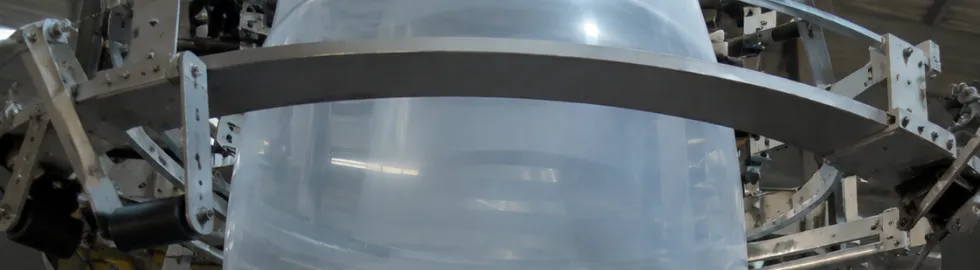
This workshop will explain the root causes and proven strategies to eliminate common problems that occur when operating blown film lines. Topics will include how to set up extruder temperature profiles as well as how to adjust processing conditions for screw wear, surging, melt fracture, interfacial instability, gels, gauge variation, defective surface treatment, wrinkles and deformed rolls. Production staff will find the program useful to quickly identify and fix processing problems. Quality control personnel will find the topics useful when reviewing defects. Maintenance staff will find this information useful to identify the “work arounds” that can be used until repairs can be completed.
Agenda
(Click each session to expand)
December 3, 2026
Duration: 2 Hours
Outline
TBA
December 4, 2026
Duration: 2 Hours
Outline
TBA
December 7, 2026
Duration: 2 Hours
Outline
TBA
If you can't attend one or several sessions live, or if you want to review some concepts, the recordings will be available after each session.
Paul Waller obtained his B.Eng. in Chemical Engineering at McGill University in Montréal, Québec and his MBA at the Schulich School of Business, York University in Toronto, Ontario. Mr. Waller is an Honored Service member of the Society of Plastics Engineers, Councillor and past-President its Ontario Board of Directors, past President of the SPE’s Flexible Packaging Division and past co-Chair of the Canadian Plastics Sector Council Board of Directors, He is the first candidate to receive the designation Certified Plastics Practitioner for Blown Film Extrusion Level 3 by the Canadian Plastics Sector Council.
Mr. Waller started his career in Dow Chemical Canada’s polyethylene technical service group before moving to Esso Chemical Canada’s vinyl division. After working with BOPP at Mobil Chemical Canada, he became Sales Manager of blown film machinery at Macro Engineering Co. Ltd. Mr. Waller subsequently joined the Canadian Plastics Institute as Seminar Manager and became Manager of Information and Education Services when it merged with the Canadian Plastics Industry Association. Mr. Waller then joined Haremar Plastic Manufacturing Limited as Director of Technical Operations before founding Plastics Touchpoint Group, Inc. in 2000.
Mr. Waller designed and delivered the Blown Film Technology Program for the Canadian Plastics Training Centre in Toronto and SENAI in Brazil. He has provided intensive in-house training to more than 1,600 operators, technicians and engineers on five continents in both English and French. He has published 5 books on film extrusion and dozens of articles in major trade publications.
This workshop is designed for engineers, scientists, and technicians involved in the design, processing, or optimization of single screw extrusion systems. It is ideal for professionals seeking to build a strong foundational knowledge of the extrusion process, moving beyond trial-and-error to a more scientific approach.
This includes:
Process and Manufacturing Engineers responsible for achieving optimum processing and troubleshooting issues like gels and degradation products.
Design Engineers who work with screw geometry and need to understand how design choices impact performance.
Materials Scientists and R&D Professionals focused on how polymer properties—such as molecular weight, bonds, and rheology—affect extrusion performance.
Technical Managers and Supervisors who oversee extrusion lines and want a deeper understanding of the process to improve efficiency and guide their teams.
Why Should You Attend?
Are you struggling to optimize your single screw extruder for consistent, high-quality output?
Do you face challenges like gels and degradation products when you introduce a new material?
Is it difficult to predict how your extruder will perform without resorting to costly trial-and-error?
Are you unsure how screw design, rotation speed, and die pressure truly affect your process and final product?
Do you lack a fundamental understanding of the physics behind solids conveying, melting, and metering?
If these questions resonate with you, this workshop was designed to help you solve them.
Everyday Problems You’ll Address
How can I use fundamental engineering principles to control my extrusion process?
What makes the metering section so critical, and how do I ensure it's in control of the final output?
How do I properly use material data like viscosity and the shear thinning power law constant to predict and optimize flow?
What is the real impact of screw rotation and die pressure on melt temperature and quality?
Can I accurately diagnose process issues like gels and degradation by understanding the underlying science of the screw?
What You’ll Learn
The core mechanics of a single screw extruder, including the distinct functions of the solids conveying, transition (melting), and meter sections.
How to apply fundamental principles of rheology to understand the effect of polymer viscosity and shear thinning on your process.
The difference between literature models and experimental data for screw rotation, pumping, and temperature analysis.
A systematic approach to optimize your extruder setup using key data like screw dimensions, rotation rate, die pressure, and material viscosity.
How to diagnose and troubleshoot common issues by understanding their root causes in the process, from solid bed breakup to material effects.
Why This Course Matters
As demands for product quality, efficiency, and sustainability increase, simply “running” an extruder isn’t enough. A deep, fundamental understanding of the process is required to stay competitive and solve complex challenges.
This workshop provides a strong engineering foundation that enables you to:
Optimize your process with confidence.
Diagnose issues with a scientific approach.
Bring innovation and predictability to your manufacturing floor.
If you're ready to master the science behind the screw and take full control of your extrusion process, this workshop is for you.
This educational program is provided as a service of SPE. The views and opinions expressed on this or any SPE educational program are those of the Speaker(s) and/or the persons appearing with the Speaker(s) and do not necessarily reflect the views and opinions of the Society of Plastics Engineers, Inc. (SPE) or its officials, employees or designees. To comment or to present an opposing or supporting opinion, please contact us at info@4SPE.org.
Refund Policy
Full refund 14 days prior to the event start date. Please contact customerrelations@4spe.org for assistance with registration.
Copyright & Permission to Use
When you enter a SPE, a division of PLASTICS event or program, you enter an area where photography, audio, and video recording may occur. By entering the event premises, you consent to interview(s), photography, audio recording, video recording and its/their release, publication, exhibition, or reproduction to be used for news, webcasts, promotional purposes, telecasts, advertising, inclusion on websites, social media, or any other purpose by SPE and their affiliates and representatives. Images, photos and/or videos may be used to promote similar events in the future, highlight the event and exhibit the capabilities of SPE. You release SPE, their officers and employees, and each and all persons involved from any liability connected with the taking, recording, digitizing, or publication and use of interviews, photographs, computer images, video and/or or sound recordings. By entering the event premises, you waive all rights you may have to any claims for payment or royalties in connection with any use, exhibition, streaming, web casting, televising, or other publication of these materials, regardless of the purpose or sponsoring of such use, exhibiting, broadcasting, web casting, or other publication irrespective of whether a fee for admission or sponsorship is charged. You also waive any right to inspect or approve any photo, video, or audio recording taken by SPE or the person or entity designated to do so by SPE. You have been fully informed of your consent, waiver of liability, and release before entering the event.
Anti-Trust Statement
No discussion among members, volunteers, or staff, which attempts to arrive at any agreement regarding prices, terms or conditions of sale, distribution, volume, territories, or customers;
No activity or communication which might be construed as an attempt to prevent any person or business entity from gaining access to any market or customer for goods or services or any business entity from obtaining services or a supply of goods;
No activity or communication which might be construed as an agreement to refrain from purchasing or using any materials, equipment, services or supplies of or from any supplier; or
No other activity which violates anti-trust or applicable laws aimed at preventing unfair competition.
This site uses cookies to recognize members so as to provide the benefits of membership. We may also use cookies to understand in general how people use and visit this site. Please indicate your acceptance to the right. Learn More..