SPE WORKSHOP: Single Screw Fundamentals for Design and Optimum Processing
Workshop
Single Screw Fundamentals for Design and Optimum Processing
October 6, 7 & 9, 2026 All workshop days are from 11:00 AM to 1:00 PM ET. Online
Summary
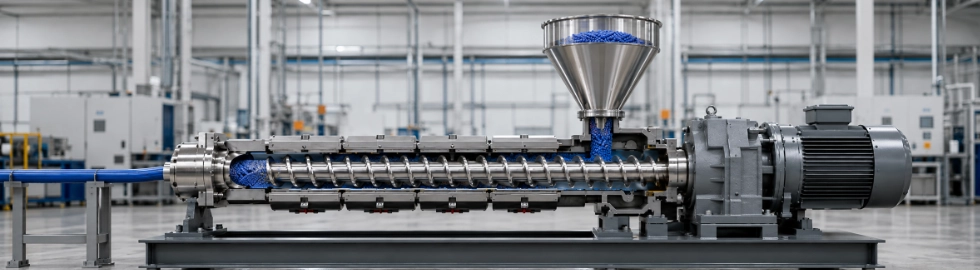
This workshop provides a comprehensive foundation in Single Screw Fundamentals for Design and Optimum Processing. Participants will begin with an introduction to the basic single screw extruder and its functional parts , learning to convert screw geometry into useful mathematical calculations.
The curriculum connects extrusion performance directly to material science, examining molecular weight and distribution , basic polymer bonds , and primary degradation mechanisms. A core focus is placed on rheology and how polymer viscosity and shear thinning influence the process. The course explores the distinct functional zones of the screw, including:
Solids Conveying: Analysis of the current model and its predictive limitations.
Melting Zone: A look at the current melting model and the role of components like barrier screws.
Metering Section: Focus on meter section calculations and the effect of die pressure on temperature.
The seminar delves into advanced screw rotation flow analysis , comparing literature models for pumping and temperature with experimental data. It also explains how changes in material can lead to gels and degradation products. Ultimately, attendees will learn the fundamentals for optimizing their single screw setup by leveraging key data—such as viscosity , rotation rate , die pressure , screw dimensions , and the shear thinning power law constant —to ensure the metering section is in control of the output.
Agenda
(Click each session to expand)
October 6, 2026
Duration: 2 Hours
Outline
Introduction
Basic single screw extruder
Calculations to convert Screw Geometry to Useful Math
Focus on Screw Rotation Analysis and Effect of Polymer Viscosity as represented by Shear Thinning
Material Issues Related to Extruder Analysis
Molecular weight and distribution
Basic polymer bonds
Primary degradation mechanisms
Rheology (Viscosity) as applied to extrusion
October 7, 2026
Duration: 2 Hours
Outline
Understanding the Issues When Evaluating of a Single Screw
Single Screw Extruder Basics
Screw Functional Parts
Solids conveying
Current Model
Limitations to Solid Conveying Predictions
Fluid encapsulation of Solid Bed
Transition Zone (Melting Zone)
Importance of Solid bed Encapsulation
Current Melting Model
Mention Barrier Screw
Meter Section Calculations
Develop Screw Rotation Model
Frame Change with no change in Process physics
Stationary barrel
Helix is pump
Screw Rotation Flow Data
Literature Model: Screw Rotation Pumping and
Screw Rotation Analysis to Arrive at Flow Model
Effect of Polymer Shear Thinning (Power Law) on Prediction of Flow"
October 9, 2026
Duration: 2 Hours
Outline
Literature Model: Temperature Analysis
Experimental data comparison
Over prediction from Experimental Barrel Rotation
Screw rotation dissipation model
Effect of Die Pressure on Meter Temperature
Mixing
During Melting
Bed breakup
Mixing most common device
Chaotic Mixing
Fundamentals for Optimizing Single Screw Set Up
Metering section must be in control of output
Needed data and Model Predictions
Viscosity
Rotation Rate
Die Pressure
Screw dimensions
Shear Thinning (power law constant)
Why material change can lead to gels and degradation products
If you can't attend one or several sessions live, or if you want to review some concepts, the recordings will be available after each session.
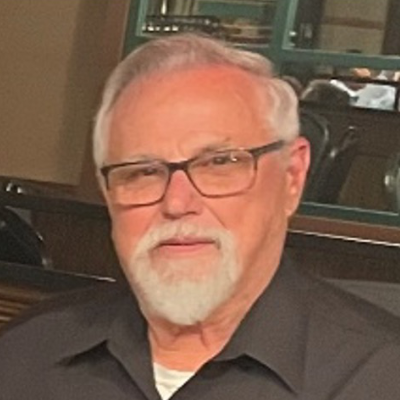
Greg started out as a poor naïve clam digger, he did dig clams, in Sedgwick, ME, on the Down East coast of Maine and graduated from Blue Hill George Stevens Academy in 1960. Then he attended the University of Maine at Orono for a little less than 8 years while completing the work for his B.S., M.S., and PhD. in Chemical Engineering. For his 60 plus years after his formal education, he has focused on gaining a fundamental understanding of industrially important materials and processing problems. While addressing many of these problems, new fundamental understanding of the process or polymer material had to be developed.
During his 13-year career at General Motors Research he was instrumental in solving corporate production issues in extrusion, injection molding, polyurethane foam and elastomers, electrodeposition of paint, and epoxy systems. At Mobile Chemical he oversaw the design and construction of a 40,000 sq ft polymer process research and tech service laboratory and purchased and commissioned 11 million dollars’ worth of process equipment focused on blown film, case film, sheet extrusion, injection molding, and compounding in about 3 years: all these processes required understanding extrusion concepts. He joined Clarkson University in 1984 and developed a focus on injection molding, all phases of single screw extrusion, blown film, liquid crystal systems kinetics, and electronic substrates and the rheology and processing of highly filled systems. He directed Clarkson Extrusion and Mixing Consortium from 1991-2000. He now works as a consultant from his home on the coast of Maine.
In 2019, he initiated a project involving 13 international investigators that led to a new 2.5 D model for twin-screw extruders and defined processing experiments to determination of how fibers tows and filler particles de-bond and are dispersed in the polymer matrix. The research program has two primary goals: develop and publish fiber dispersion data using industrial extrusion screw rotation rates and feed parameters and test a new Hamaker molecular interactions theory so industry can more economically disperse inorganic particles and glass or carbon fibers in both polar and non-polymer materials. The experiments are finished, and analysis should be completed the end by 2025. He has developed new theory for the feed, melting, and incorporation of filler for twin screw extruders since 2019 and this along with the Hamaker analysis has resulted in four papers published in Polymer Engineering and Science. Where possible my goal is to provide the polymer community with new useful information when not constrained by knowledge of propriety nature.
This workshop is designed for engineers, processors, designers, technicians, technical managers, and manufacturing professionals involved in single screw extrusion, screw design, polymer processing, or troubleshooting extrusion performance. It is especially useful for those who work with thermoplastic materials and need a stronger understanding of how screw geometry, material behavior, rheology, pressure, temperature, and operating conditions interact to influence output, quality, and process stability.
Why Should You Attend?
You should attend this workshop if you want to move beyond trial-and-error extrusion adjustments and develop a more technical, data-driven understanding of single screw processing. The course connects practical machine operation with the fundamentals of polymer science, screw design, flow behavior, and metering section control. Participants will gain the knowledge needed to better evaluate process conditions, interpret material behavior, and make informed decisions that improve consistency, reduce defects, and optimize single screw extrusion performance.
Everyday Problems You’ll Address
This course addresses common extrusion challenges such as unstable output, poor melting performance, excessive temperature rise, material degradation, gels, inconsistent pressure, and changes in product quality caused by shifts in material behavior or operating conditions. Participants will examine how viscosity, shear thinning, screw speed, die pressure, screw dimensions, and material properties affect the extrusion process, helping them identify whether problems originate in solids conveying, melting, metering, material selection, or process setup.
What You’ll Learn
Participants will learn the fundamentals of single screw extruder operation, including the function of key screw sections and how screw geometry can be converted into useful engineering calculations. The workshop covers material science concepts such as molecular weight, molecular weight distribution, polymer bonds, degradation mechanisms, rheology, viscosity, and shear thinning behavior. Attendees will also study solids conveying, melting models, barrier screw function, metering section calculations, screw rotation flow analysis, and the relationship between pumping, temperature, pressure, and experimental process data.
Why This Course Matters
Single screw extrusion performance depends on more than machine settings; it is controlled by the interaction between material behavior, screw design, flow mechanics, temperature, pressure, and process conditions. This course matters because it gives participants the technical foundation needed to understand those interactions and apply them in real processing environments. By learning how to evaluate the metering section, interpret rheological data, and recognize the causes of degradation or instability, attendees will be better equipped to optimize output, improve product quality, and make extrusion decisions based on measurable fundamentals rather than guesswork.
This educational program is provided as a service of SPE. The views and opinions expressed on this or any SPE educational program are those of the Speaker(s) and/or the persons appearing with the Speaker(s) and do not necessarily reflect the views and opinions of the Society of Plastics Engineers, Inc. (SPE) or its officials, employees or designees. To comment or to present an opposing or supporting opinion, please contact us at info@4SPE.org.
Refund Policy
Full refund 14 days prior to the event start date. Please contact customerrelations@4spe.org for assistance with registration.
Copyright & Permission to Use
When you enter a SPE, a division of PLASTICS event or program, you enter an area where photography, audio, and video recording may occur. By entering the event premises, you consent to interview(s), photography, audio recording, video recording and its/their release, publication, exhibition, or reproduction to be used for news, webcasts, promotional purposes, telecasts, advertising, inclusion on websites, social media, or any other purpose by SPE and their affiliates and representatives. Images, photos and/or videos may be used to promote similar events in the future, highlight the event and exhibit the capabilities of SPE. You release SPE, their officers and employees, and each and all persons involved from any liability connected with the taking, recording, digitizing, or publication and use of interviews, photographs, computer images, video and/or or sound recordings. By entering the event premises, you waive all rights you may have to any claims for payment or royalties in connection with any use, exhibition, streaming, web casting, televising, or other publication of these materials, regardless of the purpose or sponsoring of such use, exhibiting, broadcasting, web casting, or other publication irrespective of whether a fee for admission or sponsorship is charged. You also waive any right to inspect or approve any photo, video, or audio recording taken by SPE or the person or entity designated to do so by SPE. You have been fully informed of your consent, waiver of liability, and release before entering the event.
Anti-Trust Statement
No discussion among members, volunteers, or staff, which attempts to arrive at any agreement regarding prices, terms or conditions of sale, distribution, volume, territories, or customers;
No activity or communication which might be construed as an attempt to prevent any person or business entity from gaining access to any market or customer for goods or services or any business entity from obtaining services or a supply of goods;
No activity or communication which might be construed as an agreement to refrain from purchasing or using any materials, equipment, services or supplies of or from any supplier; or
No other activity which violates anti-trust or applicable laws aimed at preventing unfair competition.
This site uses cookies to recognize members so as to provide the benefits of membership. We may also use cookies to understand in general how people use and visit this site. Please indicate your acceptance to the right. Learn More..